Hey there! I'm an industrial grade dodecene supplier, and today I want to chat about the separation methods for industrial grade dodecene after production. It's a crucial step in the process, and getting it right can make a big difference in the quality and usability of the final product.
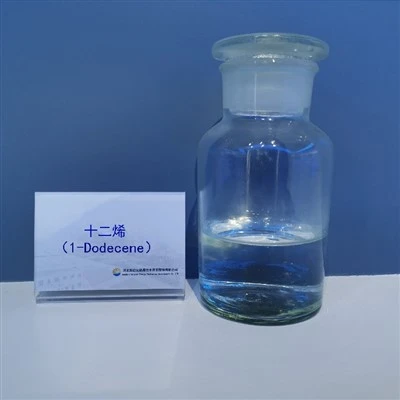
First off, let's talk a bit about what industrial grade dodecene is. Dodecene, with the Dodecene CAS 25378-22-7, is an important olefin raw material. Industrial grade dodecene is widely used in various industries, such as lubricant additives, surfactants, and plasticizers. But after the production process, it usually contains a bunch of impurities and by - products, and that's where separation methods come in.
Distillation
One of the most common separation methods is distillation. It's a classic technique that's been around for ages. Distillation works based on the differences in boiling points of the components in a mixture. In the case of industrial grade dodecene, the mixture contains dodecene and other substances like isomers, by - products from the production reaction, and unreacted starting materials.
The basic principle is simple. You heat the mixture in a distillation column. The substances with lower boiling points will vaporize first and rise up the column. As the vapor travels up, it cools and condenses at different levels depending on its boiling point. The condensed liquid is then collected separately.
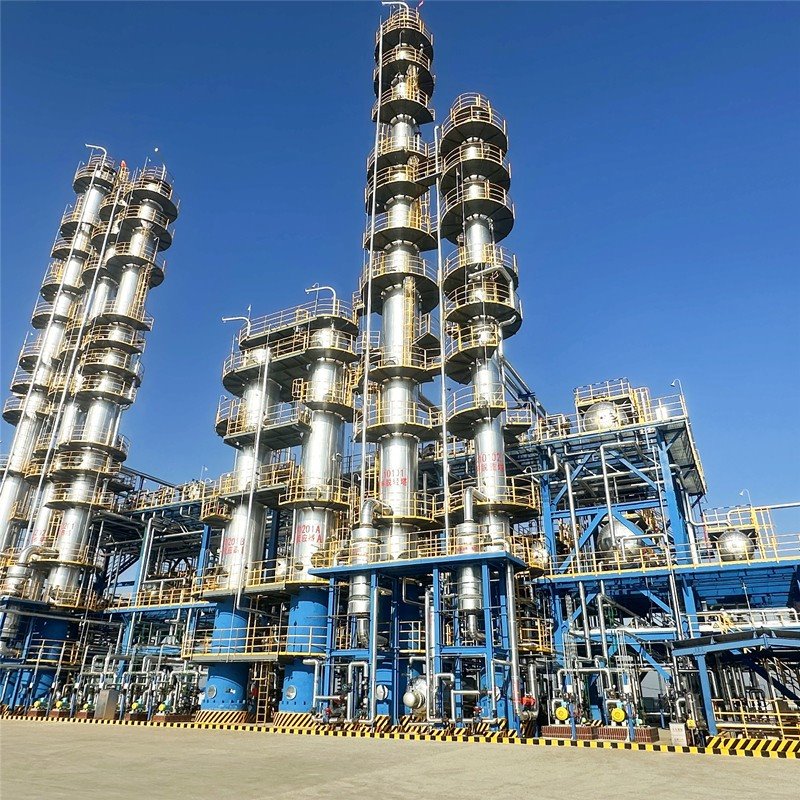
For dodecene, since it has a specific boiling point range, we can carefully control the temperature in the distillation column to separate it from other components. This method is pretty effective, but it has some limitations. For example, if there are substances with very similar boiling points to dodecene, it can be challenging to achieve a high - purity separation.
Extraction
Extraction is another useful separation method. It involves using a solvent to selectively dissolve one or more components from the mixture. We choose a solvent that has a high affinity for the impurities or the components we want to remove from the dodecene.
Let's say we have a mixture of dodecene and some polar impurities. We can use a non - polar solvent like hexane to dissolve the dodecene, while the polar impurities will stay in the aqueous phase if we do a liquid - liquid extraction. After the extraction, we can separate the two phases (the organic phase with dodecene and the aqueous phase with impurities) using a separating funnel.
However, finding the right solvent is crucial. The solvent should not react with dodecene and should have a good selectivity for the impurities. Also, we need to deal with the solvent recovery after the extraction process to make it cost - effective.
Adsorption
Adsorption is a method that uses adsorbents to remove impurities from the dodecene. Adsorbents are materials with a large surface area that can attract and hold certain substances on their surface. For example, activated carbon is a commonly used adsorbent.
When the industrial grade dodecene passes through a bed of activated carbon, the impurities in the dodecene will be adsorbed onto the surface of the activated carbon. The dodecene, on the other hand, will pass through the bed relatively unaffected.
The advantage of adsorption is that it can remove a wide range of impurities, including small molecules and even some trace contaminants. But the adsorbent has a limited capacity, and it needs to be regenerated or replaced after a certain amount of use.
Membrane Separation
Membrane separation is a more modern method. It uses a semi - permeable membrane to separate different components in the mixture based on their size, shape, or solubility. In the case of dodecene, we can use a membrane that allows dodecene molecules to pass through while blocking the larger or more polar impurities.
The main benefit of membrane separation is that it can operate at relatively low temperatures, which is good for heat - sensitive substances. It also has a high separation efficiency and can be easily integrated into a continuous production process. However, the membranes can be expensive, and they need to be maintained properly to avoid fouling.
Chromatography
Chromatography is a powerful separation technique, especially when high - purity dodecene is required. There are different types of chromatography, such as column chromatography and gas chromatography.
In column chromatography, the mixture is passed through a column filled with a stationary phase. The components in the mixture will interact differently with the stationary phase, and they will move through the column at different rates. This allows us to separate the dodecene from other components.
Gas chromatography is mainly used for analyzing the composition of the mixture and can also be used for small - scale separation. It involves vaporizing the mixture and passing it through a column with a stationary phase. The components will separate based on their volatility and interaction with the stationary phase.
Now, why are these separation methods so important for us as an industrial grade dodecene supplier? Well, high - purity dodecene is in high demand in the market. Customers want a product that meets their specific requirements, whether it's for use in high - performance lubricants or other applications. By using effective separation methods, we can ensure that our Industrial Grade Dodecene CAS 25378-22-7 has a low level of impurities and a high degree of purity.
We also need to consider the cost - effectiveness of these separation methods. We want to achieve the best separation results while keeping the production costs down. That's why we often combine different separation methods to get the most out of each one.
If you're in the market for industrial grade dodecene or have any questions about the separation process, don't hesitate to reach out. We're here to provide you with high - quality products and share our knowledge and experience in the field. Whether you're working on a small - scale project or a large - scale industrial application, we can offer the right solution for you.
References
- Smith, J. (2018). Separation Techniques in the Chemical Industry. New York: Chemical Press.
- Johnson, A. (2020). Olefin Production and Separation. London: Petrochemical Publishing.