Branched nonene, a significant hydrocarbon in the petrochemical industry, finds widespread applications in the production of lubricants, plasticizers, and detergents. As a reliable supplier of branched nonene, we understand the importance of analytical methods in ensuring its quality and performance. In this blog, we will explore the various analytical methods used for branched nonene and their significance in the industry.
Gas Chromatography (GC)
Gas chromatography is one of the most commonly used analytical methods for branched nonene. It is a powerful technique that separates and analyzes volatile compounds based on their interaction with a stationary phase and a mobile gas phase. In GC analysis, a sample of branched nonene is injected into a heated injector, where it is vaporized and carried by an inert gas (such as helium) through a column packed with a stationary phase. Different components in the sample interact differently with the stationary phase, resulting in different retention times. The separated components are then detected by a detector, such as a flame ionization detector (FID) or a mass spectrometer (MS).
The advantages of GC analysis for branched nonene include high sensitivity, good resolution, and the ability to identify and quantify individual components. It can provide detailed information about the purity, composition, and isomeric distribution of branched nonene. For example, GC analysis can determine the percentage of different isomers of nonene in a sample, which is crucial for evaluating its quality and suitability for specific applications. Additionally, GC can be used to detect trace impurities and contaminants in branched nonene, ensuring its compliance with industry standards.
Mass Spectrometry (MS)
Mass spectrometry is often coupled with gas chromatography (GC - MS) to provide more comprehensive information about branched nonene. MS analyzes the mass - to - charge ratio (m/z) of ions generated from the sample components. When used in combination with GC, MS can identify the separated components in the GC chromatogram by comparing their mass spectra with known spectra in a database.
In the case of branched nonene, MS can help in determining the molecular structure of different isomers. The fragmentation pattern of the nonene molecules in the mass spectrometer provides clues about the arrangement of carbon atoms and the presence of branches. This is particularly important as different isomers of nonene may have different physical and chemical properties, which can affect their performance in various applications. For instance, some isomers may have better solubility or reactivity, making them more suitable for specific industrial processes.
Moreover, MS can be used for quantitative analysis. By measuring the intensity of specific ions corresponding to the nonene components, the concentration of each component in the sample can be accurately determined. This is essential for quality control and ensuring consistent product quality.
Nuclear Magnetic Resonance (NMR)
Nuclear magnetic resonance spectroscopy is another valuable analytical tool for branched nonene. NMR measures the magnetic properties of atomic nuclei, such as hydrogen (¹H) or carbon (¹³C), in a molecule. The chemical environment of the nuclei affects their resonance frequencies, resulting in characteristic NMR spectra.
For branched nonene, ¹H NMR can be used to determine the number and type of hydrogen atoms in the molecule, as well as their connectivity. The integration of the NMR signals provides information about the relative number of hydrogen atoms in different chemical environments. Similarly, ¹³C NMR can provide details about the carbon skeleton of the nonene molecule, including the position of branches and the type of carbon atoms (e.g., primary, secondary, tertiary).
NMR spectroscopy is non - destructive, which means that the sample can be recovered after analysis. It also provides a high level of structural information, allowing for the accurate identification of different isomers of nonene. For example, the ¹H and ¹³C NMR spectra can distinguish between linear and branched nonene isomers, as well as between different types of branched structures.
Infrared Spectroscopy (IR)
Infrared spectroscopy measures the absorption of infrared radiation by a molecule. Different chemical bonds in a molecule absorb infrared radiation at specific frequencies, resulting in an IR spectrum that is characteristic of the molecule's structure.
For branched nonene, IR spectroscopy can be used to identify functional groups and chemical bonds present in the molecule. For example, the presence of carbon - carbon double bonds in nonene can be detected by the absorption bands around 1600 - 1680 cm⁻¹. The stretching and bending vibrations of carbon - hydrogen bonds can also be observed in different regions of the IR spectrum, providing information about the alkyl chains and branches in the molecule.
IR spectroscopy is a relatively quick and simple analytical method. It can be used for qualitative analysis to confirm the identity of branched nonene and for monitoring changes in the chemical structure during processing or storage. For example, if the nonene undergoes oxidation or isomerization reactions, these changes can be detected by shifts or changes in the intensity of the IR absorption bands.
Significance of Analytical Methods for Our Business
As a supplier of branched nonene, the use of these analytical methods is of utmost importance. They allow us to ensure the quality and consistency of our products. By accurately analyzing the composition and structure of branched nonene, we can guarantee that our customers receive a product that meets their specific requirements.
For example, if a customer is using branched nonene for the production of high - performance lubricants, they may require a specific isomeric distribution to achieve the desired lubricating properties. Through GC and MS analysis, we can determine the isomeric composition of our product and ensure that it matches the customer's specifications.
In addition, analytical methods help us in quality control during the manufacturing process. By regularly analyzing samples at different stages of production, we can detect any deviations from the standard and take corrective actions in a timely manner. This ensures that our products are of high quality and reduces the risk of product recalls or customer complaints.
Related Products and Their Links
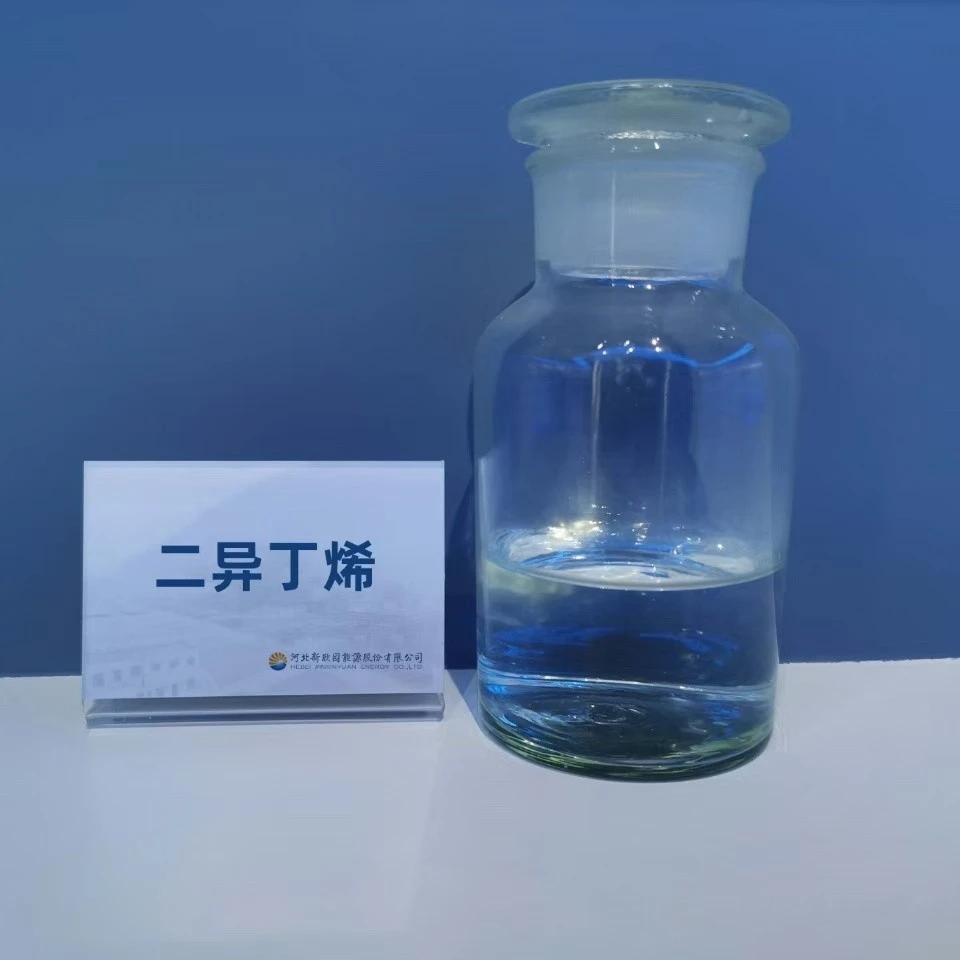
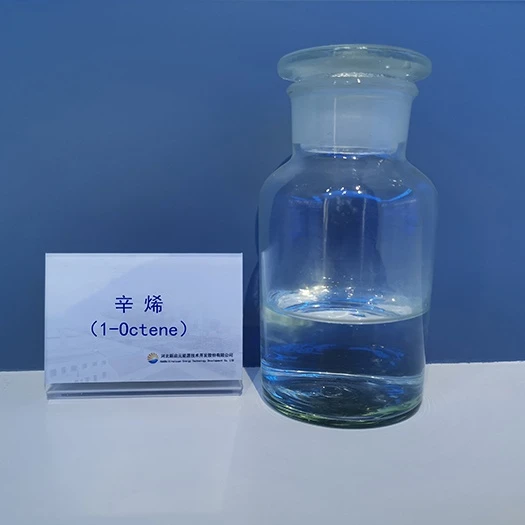
We also offer related products such as Diisobutylene Isomer Mixture CAS 25167 - 70 - 8, Diisobutylene CAS 25167 - 70 - 8, Octene CAS 111 - 67 - 1, Isobutylene CAS 115 - 11 - 7, and Industrial Grade Dodecene CAS 25378 - 22 - 7. These products are also important in the petrochemical industry and can be used in conjunction with branched nonene in various applications.
Invitation to Contact for Purchase
If you are interested in purchasing branched nonene or any of our related products, we encourage you to contact us for further discussion. Our team of experts is ready to provide you with detailed product information, sample availability, and competitive pricing. Whether you are a small - scale manufacturer or a large - scale industrial enterprise, we can meet your specific needs. Let's start a conversation and explore how our high - quality products can contribute to the success of your business.
References
- Silverstein, R. M., Webster, F. X., & Kiemle, D. J. (2014). Spectrometric Identification of Organic Compounds. Wiley.
- McMurry, J. (2016). Organic Chemistry. Cengage Learning.
- Koenig, T. M. (2007). Gas Chromatography - Mass Spectrometry: A Practical Guide. Wiley - VCH.