Hey there! As a supplier of alkane products, I've had my fair share of dealing with different types of alkanes. Alkanes are pretty cool organic compounds made up of just carbon and hydrogen atoms, with single bonds between them. They're used in tons of industries, from fuel to chemicals, and each type has its own unique features. So, let's dive into the differences between various alkane products.
Molecular Structure and Chemical Formula
First off, we've got to talk about molecular structure and chemical formula. These are the basics that set each alkane apart. For example, methane (CH₄) is the simplest alkane. It's just one carbon atom bonded to four hydrogen atoms. It's a gas at room temperature and is a major component of natural gas.
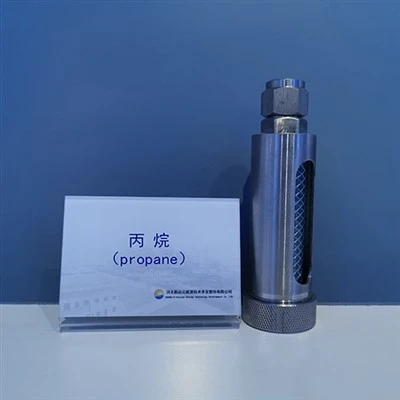
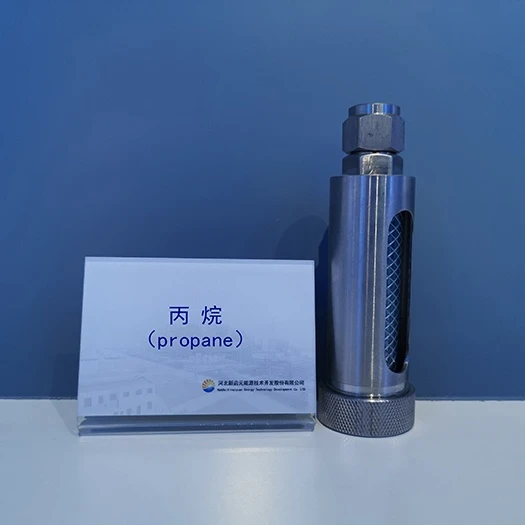
Propane, on the other hand, has the chemical formula C₃H₈. It has three carbon atoms in a chain, with the appropriate number of hydrogen atoms attached. You can check out our Industrial Propane CAS 74 - 98 - 6 for more details on this one. Propane is also a gas, but it's a bit heavier than methane. It's widely used as a fuel for heating, cooking, and even in some vehicles.
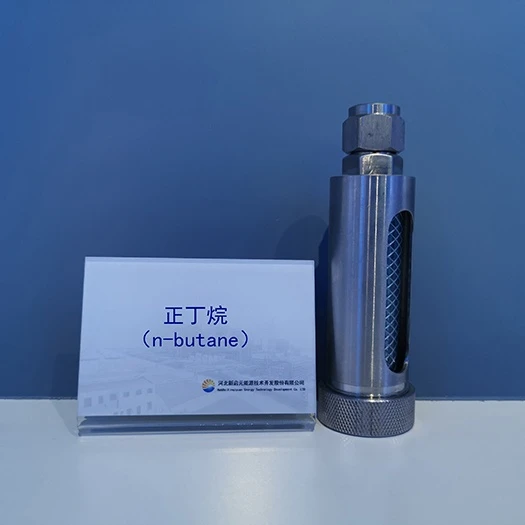
Butane comes in two main forms: n - butane (C₄H₁₀) and isobutane (C₄H₁₀). Yeah, they've got the same chemical formula, but their structures are different. N - butane has a straight - chain structure, while isobutane has a branched structure. You can find our High Purity N - Butane CAS 106 - 97 - 8 and Isobutane CAS 75 - 28 - 5 on our website. These differences in structure lead to different physical and chemical properties.
Physical Properties
Boiling Point
The boiling point of alkanes is a big deal. It's mainly determined by the size of the molecule and the strength of the intermolecular forces. Generally, as the number of carbon atoms in an alkane increases, the boiling point also goes up. This is because larger molecules have more electrons, which leads to stronger London dispersion forces.
Methane has a really low boiling point of about - 161.5°C. It's super volatile and escapes into the atmosphere easily. Propane boils at around - 42°C. This makes it a good choice for portable fuel canisters, as it remains a gas under normal conditions but can be liquefied under moderate pressure.
N - butane has a boiling point of around - 0.5°C, while isobutane boils at about - 11.7°C. The difference in their boiling points is due to their different structures. The branched structure of isobutane makes it more compact, reducing the surface area available for intermolecular interactions, so it has a lower boiling point.
Density
Density is another important physical property. Alkanes are less dense than water, which is why they float on water. As the molecular weight of alkanes increases, their density also increases slightly. For example, propane has a density of about 0.507 g/cm³ (at 25°C), while n - butane has a density of about 0.573 g/cm³ (at 25°C).
Chemical Reactivity
Combustion
All alkanes are combustible. When they react with oxygen, they produce carbon dioxide and water, along with a lot of heat. This is why they're used as fuels. However, the ease of combustion can vary. Smaller alkanes like methane and propane burn more easily and completely than larger alkanes.
For example, propane burns according to the equation: C₃H₈ + 5O₂ → 3CO₂+ 4H₂O. It releases a good amount of energy, which is why it's used in many heating and cooking applications. You can get our High Purity Propane CAS 74 - 98 - 6 for a cleaner and more efficient burn.
Substitution Reactions
Alkanes can also undergo substitution reactions, especially with halogens like chlorine and bromine. In these reactions, one or more hydrogen atoms in the alkane are replaced by halogen atoms. For example, when methane reacts with chlorine in the presence of light, it can form chloromethane (CH₃Cl), dichloromethane (CH₂Cl₂), trichloromethane (CHCl₃), and carbon tetrachloride (CCl₄).
The reactivity of alkanes in substitution reactions depends on the stability of the intermediate radicals formed during the reaction. Branched alkanes like isobutane are more reactive in substitution reactions compared to straight - chain alkanes like n - butane because the radicals formed in branched alkanes are more stable.
Applications
Fuel
As I mentioned earlier, alkanes are widely used as fuels. Methane is the main component of natural gas, which is used for heating homes, generating electricity, and cooking. Propane is used in portable stoves, barbecues, and as a fuel for some vehicles. N - butane is often used in lighters and as a propellant in aerosol cans. You can check out our N - Butane CAS 106 - 97 - 8 for these applications.
Chemical Feedstock
Alkanes are also important chemical feedstocks. They can be used to produce a wide range of chemicals, such as plastics, solvents, and detergents. For example, ethane can be cracked to produce ethylene, which is a key building block for many plastics.
Conclusion
So, there you have it! The differences between different alkane products are quite significant, from their molecular structure and physical properties to their chemical reactivity and applications. Whether you're looking for a fuel for your barbecue or a chemical feedstock for your manufacturing process, understanding these differences can help you make the right choice.
If you're interested in purchasing any of our alkane products, we'd love to have a chat with you. Just reach out to us, and we'll be happy to discuss your needs and provide you with the best solutions.
References
- Brown, T. L., LeMay, H. E., Bursten, B. E., Murphy, C. J., Woodward, P. M., & Stoltzfus, M. W. (2018). Chemistry: The Central Science. Pearson.
- McMurry, J. (2015). Organic Chemistry. Cengage Learning.